


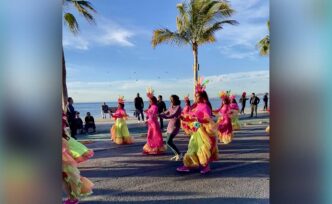
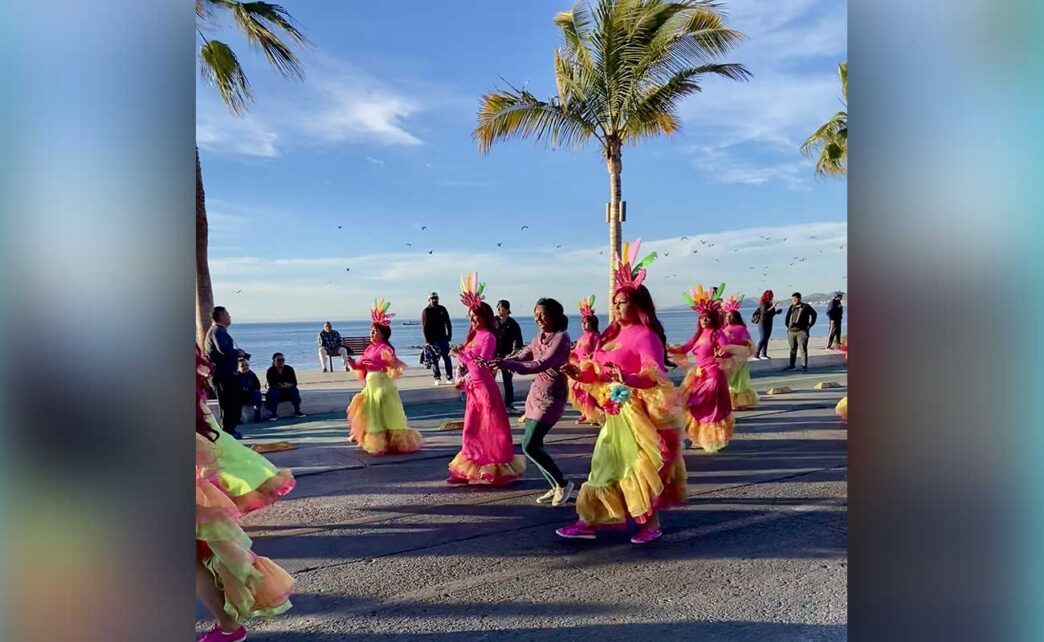
La Paz Carnival is bracing the Malecon from February 12 to 17 this year. When you think of the word carnival, what comes to mind? Based on the Oxford University definition, a carnival is, and I quote: “(a special occasion or period of) public enjoyment and entertainment involving wearing unusual clothes, dancing, and eating and drinking, usually held in the streets of a city.” I mean, they are not wrong, but for those who have attended a carnival in La Paz, you’ll agree that this definition might be a tad bit “bland” in contrast to the deep cultural, historical, and traditional depth it carries.
The original framework of carnivals predates the Romans, which has a heavy influence on the carnival as we know it today. Reminiscence of carnival-style gatherings can be observed as far back as ancient Egypt and Greece, coincidentally always during the window when we transition into the spring from the darkness of winter, welcoming the light back.
Throughout history, experts from various backgrounds, anthropologists, philosophers, or historians, for example, Mikhail Bakhtin, viewed carnival as a “safety valve” for society. As a dedicated time for social balance. By allowing citizens to wear masks and be satirical, society releases tension. Commentators such as Bakhtin view the carnival as a moment of collective healing, and as “time outside of time” where they believed the stresses of the previous year are purged through dance and ritual before entering a period of reflection.
Here in La Paz, the carnival’s history dates back to the 1800’s, initially as a private ball among the city’s elite, transitioning to the public affair in 1898. While it saw a decline in popularity towards the middle of the 20th century, the La Paz carnival reinvented itself after 1988. Since then, it has become more culturally inclusive, traditionally filled, and family-focused, as well as an economic powerhouse for the region. Each year, it attracts both Mexican and international tourists, transforming the Malecon into a magical space filled with colors, laughter, and the local street food. Something to be experienced, not described with words.
Carnival in La Paz is its own vibe, a niche within the carnival realm. Different from the world’s biggest carnivals in Rio de Janeiro, Santa Cruz, Spain, or Mardi Gras in New Orleans. La Paz’s carnival attracts those seeking a smaller yet authentically and culturally charged experience.
The 2026 Carnival “Reinas del Cambio” runs February 12–17 on La Paz Malecón. “Reinas del Cambio,” which translates to Queen of Change, is this year’s theme. Major performers include Natalia Jiménez (Feb 13), Mon Laferte (Feb 14), and Edén Muñoz (Feb 17), who will perform in public concerts at the different stages. Ricky Martin is to host one of his legendary concerts, a separate ticketed show at Estadio Guaycura on February 21. The parade this year is on February 15, 16, and 17, starting at 5:30 PM. You can find the official schedule updates through the La Paz City Council’s website at https://lapaz.gob.mx/carnaval-2023
I invite you to research the various unique traditions associated with the carnival. The La Paz tourism board’s website is a free resource where you can learn more about carnival traditions such as “Quema del Mal Humor” (Burning of Bad Humor), which is believed to clear negativity. Visit them at https://turismo.lapaz.gob.mx/. Equally, to learn more, register for their monthly English bulletin by emailing tu*****@*******ob.mx with the subject line: Subscribe me to the English Bulletin.
As you and your loved ones recalibrate your “social valves,” as Mikhail Bakhtin so eloquently said, I encourage you to do so consciously. – Naailah Auladin for more on my work: www.naailahauladin.com or reach me on WhatsApp at: +52 612 141 8002
Naailah Auladin is a life and relationship doula in La Paz, specializing in guiding individuals and families during periods of emotional trauma, crisis, and mental unrest. She focuses on teaching and inspiring individuals to take responsibility and ownership in participating in their civic duties, prioritizing the well-being of the self first, as she believes that fostering and maintaining well-managed emotional, mental, and physical health is our primary civic duty.