


Los Cabos is in the middle of peak sea turtle nesting season, with some beaches seeing up to 350 turtles arriving in a single night to lay their eggs, according to municipal officials.
Jorge Armando López Espinoza, director of the municipality’s Ecology and Environment Department, said the surge is part of the species’ natural reproductive cycle and that the city has stepped up patrols along key nesting zones to protect the process.
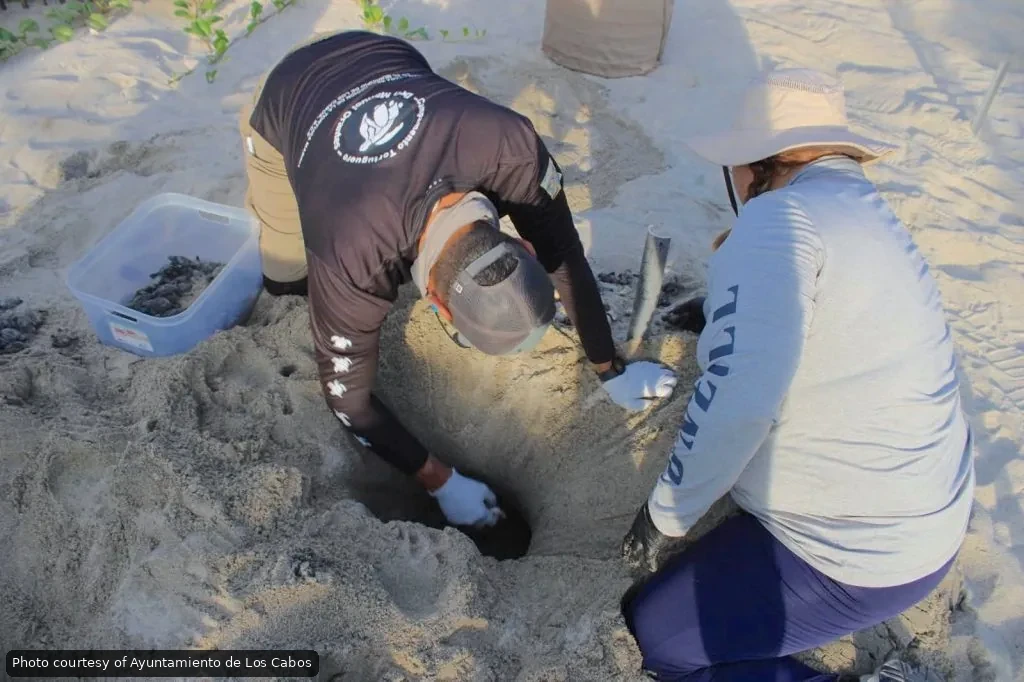
“We have reinforced our permanent presence in nesting areas,” López Espinoza said. “Our teams conduct surveillance patrols, respond to public reports, and monitor nests to reduce risks during the reproductive period.”
Which Beaches Are Seeing the Most Activity
While officials did not specify which beaches are seeing the highest numbers, San José del Cabo’s coastline has historically been a primary nesting zone for olive ridley turtles. Conservation teams are working under established field protocols and coordinating with ZOFEMAT (the federal maritime zone authority) and municipal public safety officers to cover the most active stretches of sand.
The department is handling multiple turtle sightings each night, tracking nest locations, and ensuring eggs remain undisturbed until they hatch.
How Residents and Visitors Can Help
Sea turtles are protected under Mexico’s NOM-059-SEMARNAT-2010 environmental standard, and López Espinoza emphasized that public cooperation is essential during nesting season.
Beachgoers should follow these guidelines when they encounter a nesting turtle:
Do not approach, touch, or attempt to move the animal. Keep a respectful distance and avoid flash photography or bright phone screens — artificial light disorients turtles and can interrupt the nesting process. If a turtle appears injured or stranded, call 911 immediately so responders can direct the call to the ecology department.
“The turtles are vulnerable during this stage,” López Espinoza said. “Giving them space and avoiding interference helps ensure successful nesting.”
What This Means for Los Cabos Conservation
The record nesting numbers reinforce Los Cabos’ role as a major conservation site for sea turtles in Baja California Sur. The municipality’s coordination with environmental authorities and its public outreach efforts have helped protect thousands of hatchlings in recent years.
Nesting season typically runs through late fall, with hatchlings emerging 45 to 60 days after eggs are laid. Conservation groups often organize public release events, giving residents and visitors a chance to witness the process while learning about marine protection efforts.
Anyone who spots a turtle on the beach or notices disturbance around a marked nest is encouraged to report it immediately by calling 911.
