


An extraordinary sculptural installation draws on ancient Maya-Toltec symbolism to explore the relationship between humanity, nature, technology and the future of our desert landscape.
There is something fascinating about encountering an ancient symbol through the imagination of the future. In Los Cabos, that encounter takes the form of six monumental serpents, rising from the desert landscape in an unexpected fusion of ancient Mesoamerican heritage, recycled materials and futuristic imagination.
Titled MÁASKAB TZABKAN: Futuro Serpiente (Serpent of the Future), the installation by internationally recognized Salvadoran artist Simón Vega was commissioned for Foro Mar de Cortés 2026 by curator Pedro Alonzo. Following its private inauguration on November 11, the exhibition opens to the public for free on November 12 and will remain on display through December 13 2026.
Located at Complejo Vivaz, opposite Hotel Solaz, on the former site of the Los Cabos Open tennis tournament, the installation offers visitors an opportunity to experience contemporary art in an expansive outdoor desert setting.
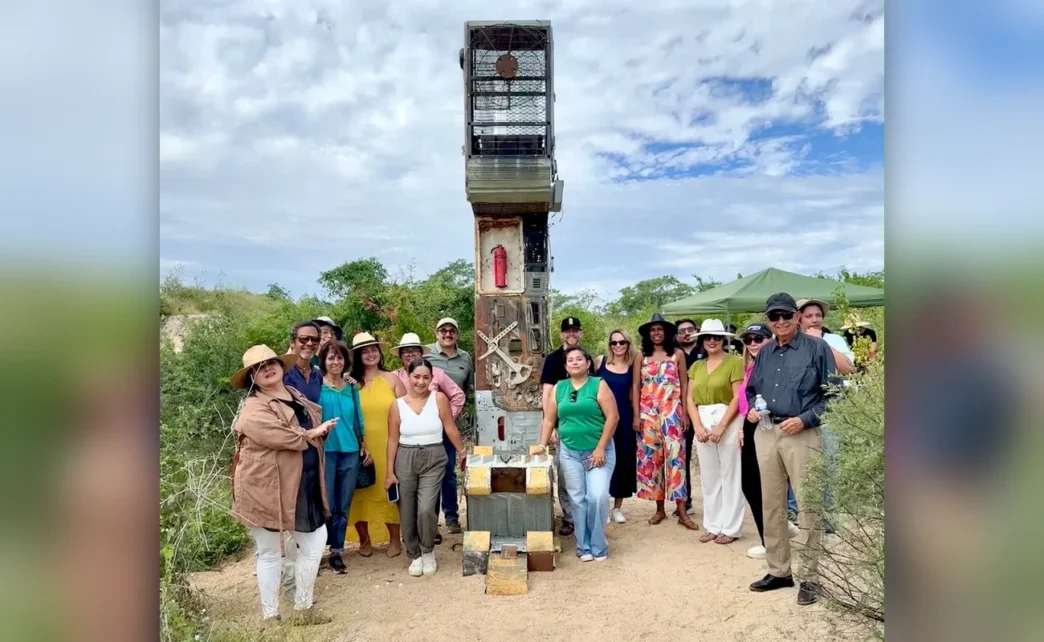
Comprising six sculptures, each standing four metres tall, the installation takes its inspiration from the serpent-shaped columns of Chichén Itzá, associated with the Maya-Toltec cultural tradition. Those ancient architectural representations depict Kukulkán, the feathered serpent deity, descending from the heavens to earth, traditionally portrayed as a rattlesnake adorned with the feathers of the quetzal.
Vega reimagines this powerful ancestral figure in a very different era.
Rather than stone and feathers, his serpents have metallic skins constructed from recycled and repurposed everyday materials. Household appliances, metal sheets, valves, ventilation components, containers, hoses and fire extinguisher tanks become part of their extraordinary physical forms. The installation is accompanied by an original soundscape developed in collaboration with artist Jimö Bastian, incorporating elements that reflect the materials and mechanical character of the sculptures.
The result is a striking interpretation of an ancient creature transported into a mechanical, dystopian future.
Beyond the sculptures, however, lies a message about our relationship with nature.
During the inaugural tour, Vega draws attention to the paradox surrounding rattlesnakes in Baja California Sur. Once revered and respected by the great civilisations of Mesoamerica, these animals are today frequently regarded as threats to be eliminated. Yet rattlesnakes are generally peaceful creatures that prefer to retreat or remain still rather than attack. They play an important ecological role in controlling rodent populations and maintaining the balance of desert ecosystems.
The artist connects their changing perception to a much broader issue: the way human development increasingly encroaches upon and destroys natural habitats. As Vega explains through the concept behind his work, what society often celebrates as development and progress can come at the expense of the very environments and species that make these landscapes unique.
His interpretation also reflects recurring themes throughout his artistic career. Vega is known for bringing together seemingly opposing worlds: ancient cultures and science fiction, traditional craftsmanship and sophisticated technology, and the realities of developing nations alongside the aspirations of the modern world.
Born in El Salvador in 1972, Vega studied Fine Arts at the University of Veracruz in Mexico before completing a master’s degree in Contemporary Art at the Complutense University of Madrid in 2006. His international exhibition history includes the IX Havana Biennial, the 55th Venice Biennale, Coachella Music Festival, the Bronx Museum and the Centre Pompidou in Paris. In 2024, he presented Tropical Space Castaways, a solo exhibition at New York’s Parrish Art Museum.
His work frequently uses found and recycled materials to challenge conventional ideas about progress, technology, cultural identity and the historical narratives through which societies understand themselves.
An installation that belongs to the landscape
One particularly meaningful aspect of MÁASKAB TZABKAN is its relationship with the environment in which it has been installed.
The sculptures are intended to interact with the desert of Los Cabos, encouraging visitors to observe not only the artwork but also the surrounding vegetation, natural environment and cultural heritage.
Exhibition details: MÁASKAB TZABKAN – Futuro Serpiente (Serpent of the Future)
Artist: Simón Vega
Curator: Pedro Alonzo
Soundscape collaboration: Jimö Bastian
Public exhibition: November 12 – December 13, 2026
Location: Complejo Vivaz, opposite Hotel Solaz, former Los Cabos Open tennis tournament site, Los Cabos, Baja California Sur.
Cost: Free to visit including free parking