


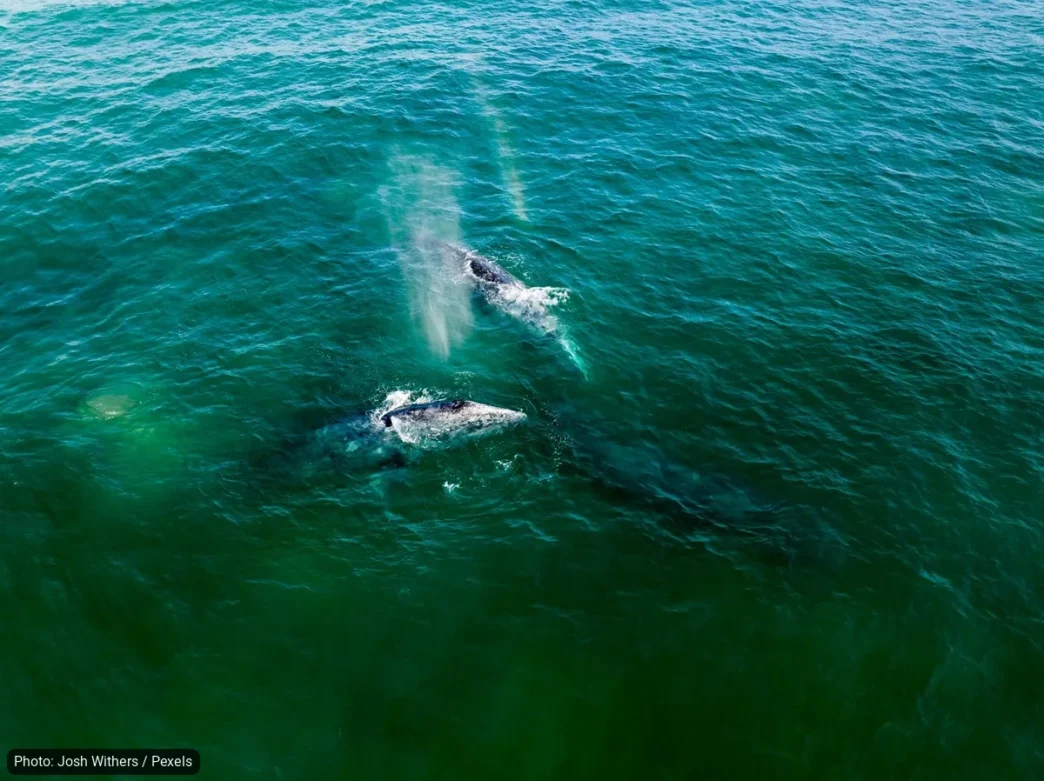
If you’re planning a whale-watching trip to Baja California Sur this winter, the calendar isn’t as simple as “whale season starts in December.” Federal wildlife authorities have set two different opening dates depending on exactly where your tour departs from, and booking the wrong week could mean waiting longer than expected to see your first spout.
According to a permit calendar published by Mexico’s environment ministry, Semarnat (the federal Secretariat of Environment and Natural Resources), in the Diario Oficial de la Federación — Mexico’s official government gazette — whale-watching tours in some parts of the state can start as early as December 15, while others must wait until New Year’s Day.
Which Areas Open December 15
Tours can begin December 15, 2026 in Los Cabos, covering Cabo San Lucas, San José del Cabo, Cabo Pulmo and Los Frailes. The same start date applies to the Ojo de Liebre and San Ignacio lagoons in the municipality of Mulegé, two of the most reliable spots in North America for close encounters with gray whales, as detailed in a past look at the best whale-watching spots in Baja California Sur.
El Sargento and La Ventana, the East Cape communities in the municipality of La Paz, also get the December 15 green light. All of these zones run through April 30, 2027.
Which Areas Wait Until January 1
Travelers heading to Puerto Adolfo López Mateos, Puerto San Carlos and Puerto Cancún, all in the municipality of Comondú, will need to plan around a January 1, 2027 start. The same later date applies to Puerto Chale, which is technically also in the La Paz municipality but sits on the Pacific side rather than the Sea of Cortez side — meaning La Paz itself has two separate opening dates depending on which coast you’re on.
Loreto Bay National Park rounds out the January 1 group. These areas also close out on April 30, 2027, matching the rest of the state.
Why the Dates Differ
The split calendar isn’t arbitrary. Officials say the staggered dates reflect when whales typically arrive in each zone and are designed to limit vessel traffic until the animals have settled in, a pattern that’s shown up in past seasons covered in stories like The Whales Are Here! The Whales Are Here!
Tour operators also have to follow NOM-131-SEMARNAT-2010, the federal standard governing how boats can approach whales, along with location-specific no-go zones. In Cabo San Lucas, that includes the port area, a roughly 1.2-mile (2-kilometer) radius around the Arch, and a protected strip running from Punta Ballenas. Cabo Pulmo and Los Frailes carry a wider 2.2-mile (3.5-kilometer) restricted coastal strip.
Booking Tips for Travelers
If you’ve already booked a December trip expecting to see whales near Puerto Chale or Loreto, you’ll want to confirm with your operator whether tours are actually running yet, since permits there don’t kick in until January 1. The safer bet for an early-December visit is Los Cabos, the Pacific lagoons near Mulegé, or the East Cape near La Paz.
Licensed operators will have current permits on hand and should be able to confirm their zone’s authorized dates. Checking before you book — especially if your trip falls in that mid-December to New Year’s window — can save you a disappointing dock-side wait instead of a boat ride.
