


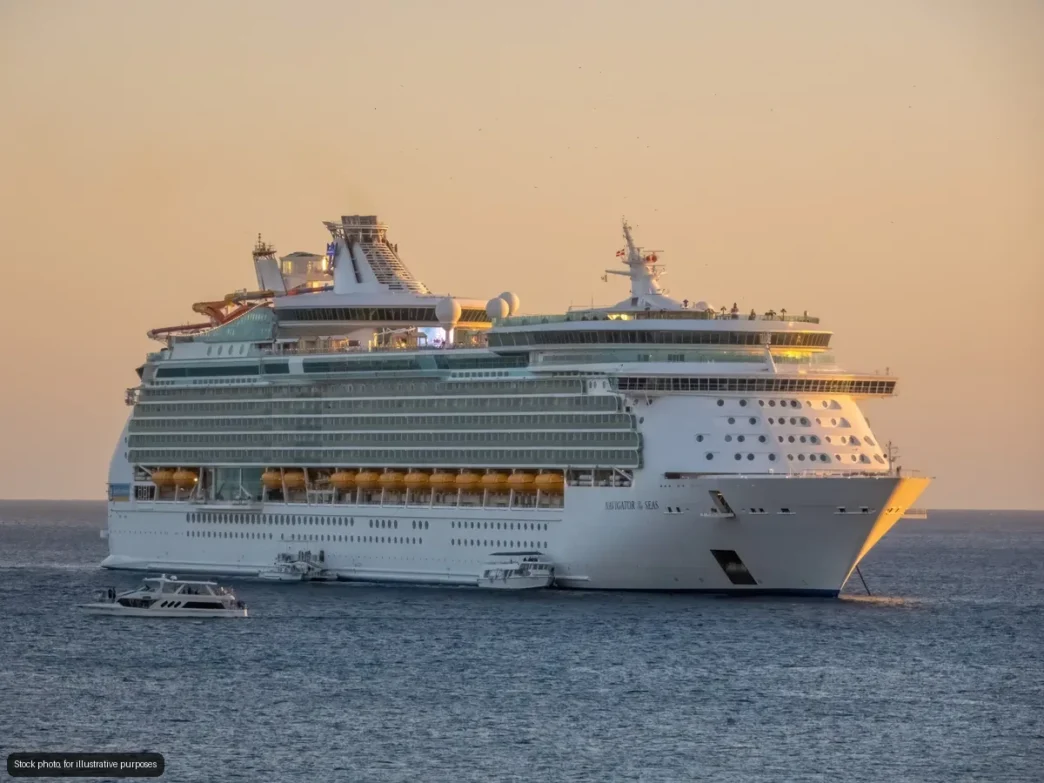
Mexico’s cruise industry is sounding the alarm over a proposed federal tax increase that could make Baja California Sur ports less competitive and drive ships to cheaper destinations across Latin America and the Caribbean.
The Mexican Association of Tourist Cruise Service Companies warned this week that a planned 35.8% hike in immigration fees — on top of charges already doubled in the past six months — threatens to raise the cost of cruising to Mexico just as other destinations hold the line on pricing.
Although the federal government’s Derecho de No Residente (DNR) tax does not directly apply to cruise passengers, cruise lines already absorb separate immigration fees that have surged from around 85 pesos per passenger to roughly 170 pesos in just six months — a near doubling that now gets passed along in ticket pricing.
Arturo Musi Gamen, president of the cruise services association, told local reporters that these increases are beginning to bite.
“In the case of the cruise lines, we already have an immigration charge that has been around for about six months,” he said. “It started at around 85 pesos per passenger and is now around 170 pesos. This is already hitting tourism.”
What It Means for Los Cabos and La Paz
For readers in Baja Sur, the concern is practical: fewer cruise ships mean fewer tourists walking the malecón, booking excursions, eating at waterfront restaurants and shopping in town. Cruise ship tourism in BCS has been a bright spot in recent seasons, but industry representatives say rising costs could reverse that momentum.
The proposed DNR increase — part of the federal Economic Package 2027 now under review in Congress — would push the non-resident tax from 983 pesos to 1,334 pesos for foreign air arrivals, a 55% cumulative jump over two years. While cruise passengers do not pay the DNR directly, the hotel sector in La Paz warned the hike sends a signal that Mexico is becoming expensive relative to competing markets.
Musi Gamen noted that the combination of a stronger peso and higher fees makes Mexico look pricey to U.S. and Canadian travelers comparing options online.
“Everything ends up affecting the passenger,” he said. “Mexico is becoming an expensive destination, and if we add that the dollar has lost ground against the peso, we are pricing ourselves out of the market.”
Dominican Republic Gaining Ground
The cruise executive pointed to the Dominican Republic as a cautionary example. That country, he said, has posted major tourism gains by keeping fees competitive and opening access to multiple source markets — including cruise lines that might otherwise call on Mexican ports.
“The Dominican Republic has seen incredible tourism growth because it has kept its rates competitive and opened up to many tourist markets,” Musi Gamen said. “Cruise passengers are going there because of the rates, as are air travelers.”
The comparison stings for Baja Sur, where officials have worked to expand cruise ship visits and diversify the region’s tourism economy beyond the traditional fly-in resort trade. Los Cabos and La Paz both depend on cruise traffic for off-season revenue, local jobs and exposure to first-time visitors who might return by air.
Where the Money Goes
Tourism leaders also took issue with how the DNR revenue would be spent. According to hotel association president Agustín Olachea, the funds are earmarked for the National Migration Institute and to subsidize the Tren Maya rail project — not for tourism infrastructure, environmental conservation or destination marketing.
By contrast, New Zealand charges a similar entry fee but directs it toward conservation and tourism infrastructure, Olachea noted.
“That does not give any benefit to the country’s tourism industry,” he said. “We want to keep growing, but this does not help us at all.”
The hotel sector is now calling on federal legislators to reconsider the proposed increase and analyze its impact on Mexico’s competitiveness. Olachea said industry groups are seeking dialogue with both chambers of Congress before the budget is finalized.
“We understand it is a revenue need for the federal government,” he said, “but they also have to analyze the effects on Mexico’s tourism competitiveness if this is approved as proposed.”
What Happens Next
The Economic Package 2027 is currently under review in the Mexican Congress. Final approval is expected in the coming weeks. If the DNR increase passes as written, it would take effect in January 2027.
For now, cruise itineraries through early 2027 remain on the books, and Los Cabos expects to increase cruise ship arrivals through the current season. But longer-term planning by the major cruise lines — Disney, Royal Caribbean, Carnival, Norwegian and others — could shift if Mexico becomes materially more expensive than alternative ports in the region.
Baja Sur is estimated to host nearly 38,000 foreign residents, many of whom also follow cruise traffic closely as a sign of the region’s health as a destination. Whether Congress listens to the industry’s concerns may determine whether those ships keep coming — or start looking elsewhere.

Boo hoo for the cruiselines. Seeing those floating Motel 6s just mars the view. Why should Cruiselines be exempt from fees associated with tourism?