


Travelers arriving in Los Cabos and other parts of Mexico with dogs from the United States now face stricter veterinary inspection requirements at the border and at airports, following new rules that took effect August 3.
The updated regulations require all dog owners crossing from the U.S. to present a GBG Inspection Certificate for the Transfer (Export) of Pet Dogs from the United States to Mexico. The certificate must be signed by a veterinarian accredited by the U.S. Department of Agriculture and dated within five days of arrival, according to Mexico’s National Service for Agri-Food Health, Safety and Quality (SENASICA).
What Happens at the Airport in Cabo
For most visitors arriving in Los Cabos, the new rules mean passing through an additional inspection checkpoint after landing. Los Cabos is primarily a flying destination, and all arriving pets must pass through a SENASICA inspection station at the airport before entering the country.
During the inspection, SENASICA personnel will check that the dog shows no signs of contagious disease, is free of external parasites, and has no fresh or healing wounds. If inspectors find ticks or other parasites during the examination, the owner will be required to hire a local veterinarian to apply treatment before the dog can leave the airport facility.
When ticks are found, SENASICA will collect samples for laboratory analysis, and the animal will remain under official custody until tests confirm the parasites do not belong to exotic species or those subject to national eradication campaigns. All costs associated with treatment and testing are the responsibility of the owner.
Enforcement Remains Unclear
Though the requirement is confirmed on both APHIS USDA and SENASICA websites, enforcement is another matter. It remains to be seen how consistently the new protocol will be applied at Los Cabos airport and other entry points across Mexico.
Certificate Must Be Recent and Accurate
The five-day validity window means owners must schedule the veterinary inspection close to their departure date. A certificate issued too early will be rejected at the border or airport, potentially delaying travel or requiring an unplanned visit to a local vet.
The document is designed to help prevent the introduction of screwworm and other parasitic threats that can spread rapidly among animal populations, according to reporting on the new policy.
Clean Carriers and Limited Belongings
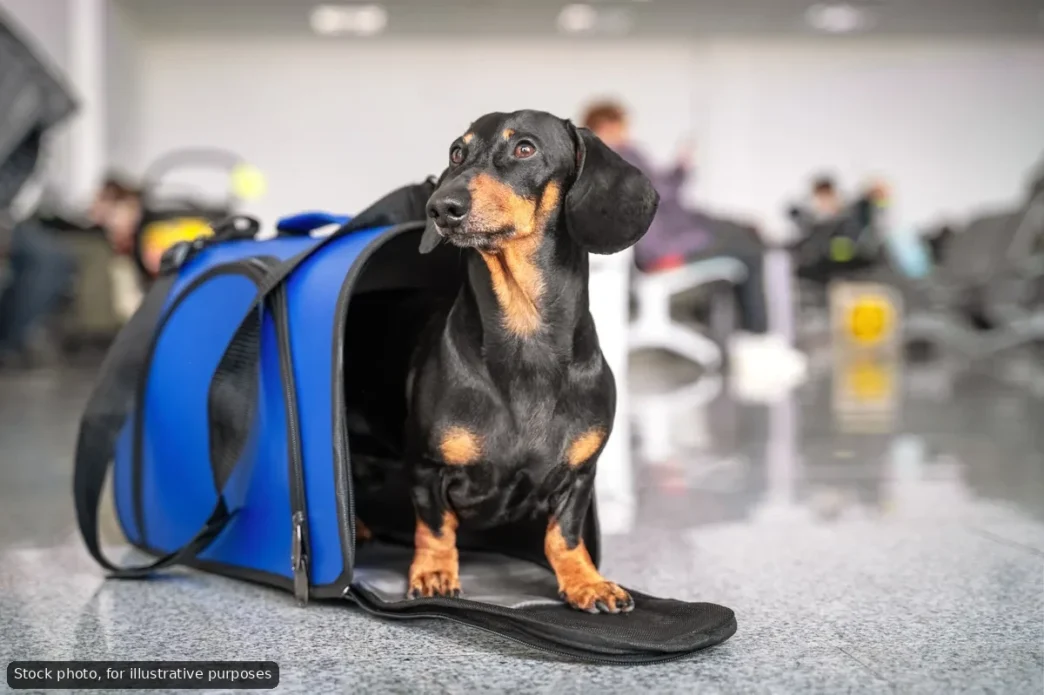
SENASICA also has strict rules for pet carriers and crates. Transporters must arrive completely clean and cannot contain newspapers, sawdust, rags, toys, bedding, or excess food. If prohibited items are found, they will be destroyed and the carrier will be disinfected at the owner’s expense.
Only enough balanced pet food for the day of arrival is permitted. Owners traveling with more food may have it confiscated during inspection.
Allow Extra Time and Bring Documentation
Travelers should plan for longer processing times, especially in the early weeks as airport and border staff adjust to the new protocol. SENASICA recommends arriving with all paperwork prepared and ensuring the certificate includes accurate information about both the dog and its owner.
The agency emphasized that the GBG certificate does not replace other documentation that may be required by different authorities during entry into Mexico. Owners should verify all current requirements with their airline and with U.S. Department of Agriculture guidance for pet travel to Mexico before booking flights.
For Los Cabos visitors who fly in with dogs, the new process adds another layer of preparation to what is already a carefully managed travel routine. The regulation is now in effect at all points of entry, including Los Cabos International Airport and land crossings along the northern border.