


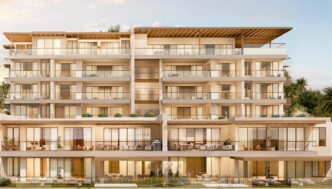
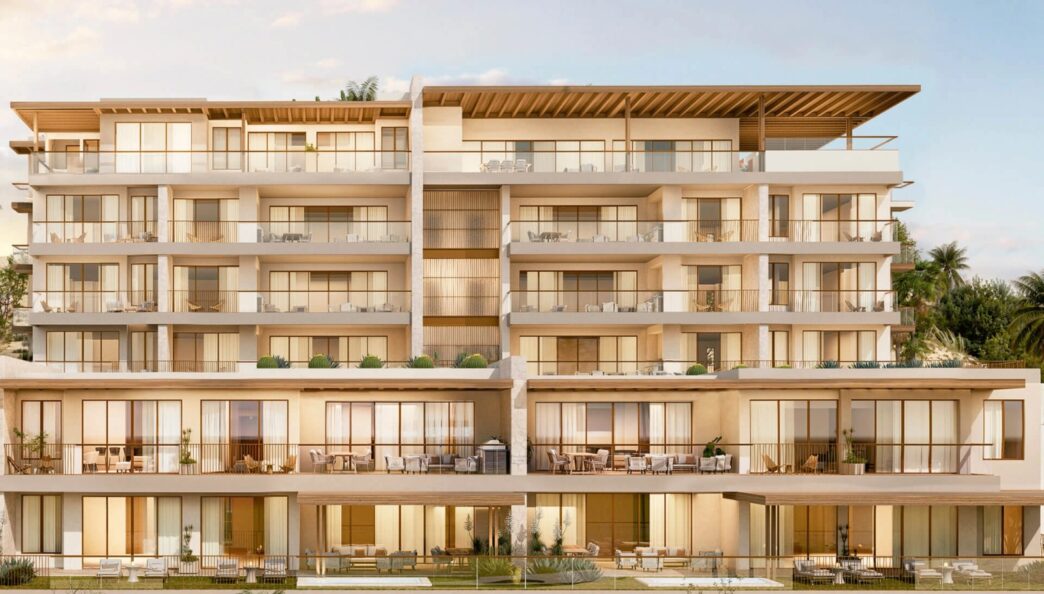
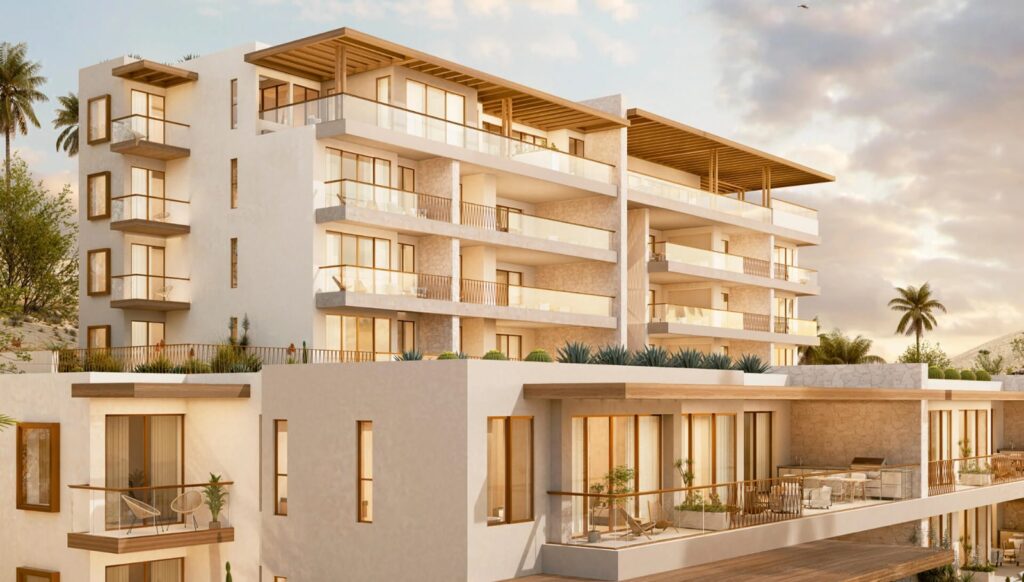
The Amura Project, a proposed residential complex of 83 units across five towers on 5.16 hectares (12.7 acres) overlooking the Pacific coast near El Faro Viejo in Cabo San Lucas, is under review by Mexico’s Ministry of Environment and Natural Resources (Semarnat). The project is part of the “Cabo Pacifica” Comprehensive Tourism Development, which received environmental authorization in 2007. A recent environmental impact study, however, raises several challenges and concerns.
Plans for the Quivira development include five apartment towers, a clubhouse, and two access gates, covering nearly 36,000 square meters with 153 parking spaces. The estimated investment exceeds $8 million USD, and construction is expected to take seven years. Supporting infrastructure, including potable water and wastewater treatment, will rely on the developer’s desalination and treatment plants to avoid additional strain on local aquifers, already under stress, particularly the Cabo San Lucas aquifer.
The environmental analysis identifies the site as a sarcocaulescent scrubland ecosystem typical of the peninsula’s semi-desert climate. It is home to protected species such as the San José Barrel Cactus (Ferocactus townsendianus) and Garambullo (Lophocereus schottii). Thirty-six plant species were recorded within the project area and 30 in the surrounding ecosystem. The study warns that clearing vegetation for construction would severely impact the habitat and displace wildlife, including species protected under NOM-059-SEMARNAT-2010.
Wildlife monitoring recorded 45 species in the broader environmental system, but only 21 within the project site, suggesting human activity and domestic animals have already affected biodiversity. Indices for mammals, birds, and reptiles indicate low to medium diversity, with further declines expected as urbanization progresses. The landscape’s visual quality, rated medium to high due to the Pacific views and topography, would likely diminish with development, increasing landscape fragility.
The report identified 273 interactions between project activities and environmental factors. While many were positive due to proposed mitigation measures, moderate to severe impacts were found, particularly during construction. The main negative effects include vegetation loss, dust generation, emissions, and noise. Recommended measures include environmental training for workers, strict demarcation of construction zones, rescue and relocation of flora and fauna, integrated waste management, solar energy use, and emissions control.
Socioeconomically, the project promises to create jobs and expand housing in a region experiencing rapid population growth and migration. However, it could also heighten pressure on natural resources and alter local customs. Demand for water, energy, and waste collection will rise, though existing infrastructure is expected to meet the needs.
The Amura Project represents a major real estate venture in Los Cabos, offering clear economic benefits but also posing significant environmental risks. Its sustainability will depend on how effectively mitigation measures are implemented to protect biodiversity, soil, water, and landscape in an ecologically sensitive area facing mounting urban pressure.