


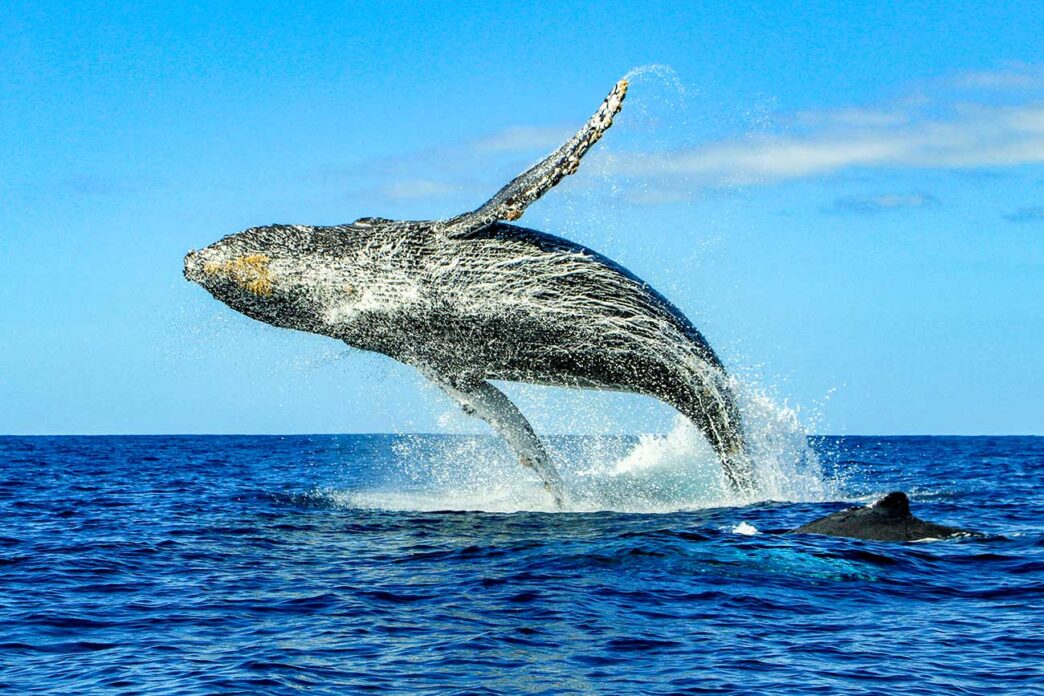
Whale watching season in Baja California Sur runs from December to April.
The season officially begins in mid-December, when the first groups of cetaceans arrive in the region’s sheltered bays. According to the La Paz City Council’s official tourism site, whales travel more than 15,000 kilometers each winter, from the frigid Bering Sea in Alaska to the warmer coastal waters of the Baja peninsula.
Upon reaching the peninsula, the whales gather at several points along the coast, including Puerto Chale, one of the closest observation areas to La Paz. This small fishing community, located in the municipality’s northwestern area, forms part of the natural migration corridor where whales return each year to reproduce after their long journey from the Arctic waters.
Whale watching in Mexico is regulated by the Official Mexican Standard NOM-131, which sets rules designed to protect the animals. The guidelines include limits on boat speed, operating hours, and minimum distances between vessels. Physical contact with whales is strictly prohibited
Main Whale Watching Sites and Dates for 2025 – 2026
According to the Marine Mammal Research Group, these are the key locations and observation periods for this season:
San Ignacio Lagoon and Ojo de Liebre (Mulegé):
December 15 – April 30
Recognized as crucial breeding grounds for gray whales.
Magdalena Bay and Santa María Bay:
January 1 – April 30
Accessible from communities such as Puerto Chale and López Mateos.
Los Cabos:
Prime viewing area for humpback whales, though certain zones are restricted due to heavy maritime traffic and coastal proximity.
As the season gets underway, environmental authorities and tour operators are reminding visitors to follow the NOM-131 regulations to ensure safe, respectful, and sustainable whale-watching experiences for both the animals and the people who come to admire them.
