


The Los Cabos water utility has announced 260 million pesos in federal infrastructure funding for eleven projects aimed at improving water distribution and wastewater treatment across the municipality. The money comes through the Fideicomiso de Saneamiento Ambiental (FISAM), a public-private trust created to finance environmental infrastructure in resort destinations.
Arturo Sandoval, president of FISAM’s technical subcommittee and director general of OOMSAPAS Los Cabos, described the projects as a direct response to population growth and seasonal demand swings. In Baja, water infrastructure announcements are common. What separates this one is the level of detail and the breadth of neighborhoods affected.
What the Projects Include
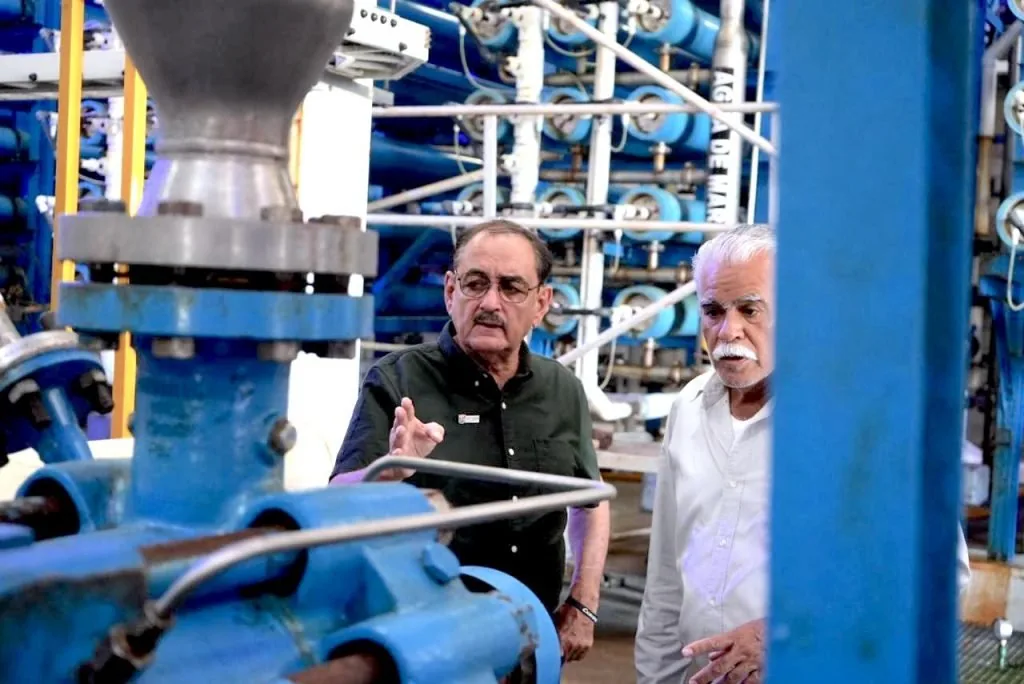
The largest single allocation will fund rehabilitation of Desalination Plant 1, a facility that serves much of the tourist corridor. Additional funding will go toward expanding and upgrading the Mesa Colorada wastewater treatment plant, which handles residential and commercial flows from Cabo San Lucas and surrounding developments.
Two rebombeo pump stations — Jardines and El Bordo — are slated for rehabilitation. These are the smaller, mid-network stations that push water uphill through older colonias, and when they fail, service drops hard. The rehabilitation is expected to include new pumps, electrical systems and structural repairs.
Another major line item is 1.3 kilometers of new sewer collector in La Brecha, within the Chula Vista neighborhood in Cabo San Lucas. Sewer lines tend to be low-visibility infrastructure until they fail, but this one serves a growing residential area that has operated on marginal capacity for years.
Two additional wastewater pump stations — Lagunitas and Cabo San Lucas zona centro — will also be overhauled. According to the municipality, the combined investment exceeds 260 million pesos, though exact allocations for each project were not disclosed.
How FISAM Works
FISAM is a joint-funding mechanism that pools contributions from the federal government, the state of Baja California Sur, the municipality of Los Cabos and private-sector participants — mainly hotels, resorts and developers. The model allows Los Cabos to finance water and wastewater projects that would otherwise wait years for full public funding. Critics have pointed out that the trust’s governance structure gives private industry more influence over infrastructure priorities than in a purely municipal process, but supporters argue it delivers results faster.
Sandoval thanked private-sector participants for their commitment during what he described as lengthy technical meetings to finalize the 2026 project list. The acknowledgment reflects the reality that in Los Cabos, major infrastructure investments rarely move forward without buy-in from tourism and real estate interests.
When Work Begins
The projects are designated for the 2026 fiscal year, which means bidding and procurement should begin soon if they haven’t already. OOMSAPAS did not provide a construction timeline, but most FISAM-funded projects take twelve to eighteen months from announcement to completion, depending on permitting, weather and contractor availability.
For residents in Chula Vista, Jardines, El Bordo and other affected neighborhoods, the investment represents a long-awaited upgrade. For the broader Los Cabos population, it is a test of whether this administration can translate funding announcements into finished infrastructure — and whether the maintenance plans that come after will be funded with the same urgency.