


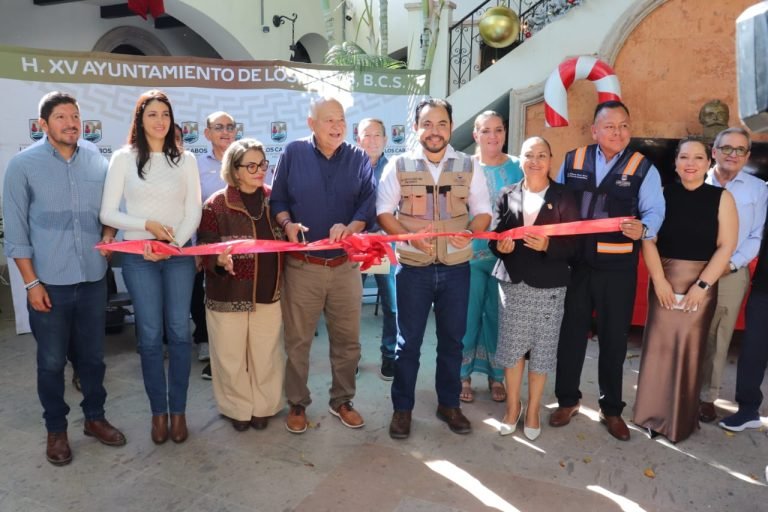
With an estimated investment of 300 million pesos, the “Unidos por Los Cabos” project aims to enhance mobility and the urban image of the municipality through the creation of safe crossings, designated bus stops, new parks, and improvements to critical intersections. The initiative seeks to reduce traffic accidents and shorten travel times across the region.
Mayor Christian Agúndez, accompanied by Baja California Sur Governor Víctor Castro, officially launched the master plan.
Governor Castro highlighted that the rapid growth of tourism in Los Cabos has created major challenges in mobility and urban planning. He said the project represents an opportunity to better organize and improve public spaces.
During the presentation, Roberto Flores, Director General of Urban Development for Los Cabos, reported that around 8,000 traffic accidents occurred between 2018 and 2023, largely due to the absence of sidewalks and safe crossings. He explained that the plan not only seeks to enhance the municipality’s appearance but also to improve road safety and travel efficiency.
Mayor Agúndez emphasized the importance of community participation through programs such as “Adopt a Kilometer,” which encourages local businesses and residents to take part in maintaining and beautifying roads. He described it as part of a broader strategy to improve the municipality’s urban environment.
The mayor added that the master plan combines ongoing projects and new initiatives focused on sports facilities, recreational areas, green spaces, and transportation. The goal, he said, is to directly benefit citizens while modernizing urban infrastructure and supporting the development of rural communities.
“This program is designed to involve all sectors,” Agúndez said. “Together, we can strengthen mobility and improve our urban landscape. Los Cabos belongs to all of us, and through coordinated work, we can build the municipality we aspire to.”
Among the main objectives of “Unidos por Los Cabos” are a 20 percent reduction in traffic accidents, a 15 percent decrease in travel times, the creation of 200 safe pedestrian crossings and 120 marked bus stops, improvements to five major intersections, and the construction of 20 parks, all aimed at improving quality of life for residents and visitors alike.
The presentation also included preliminary projects such as the Costa Azul viewpoint, designed to recover and enhance the area through safe and sustainable spaces; the rehabilitation of the historic centers of San José del Cabo and Cabo San Lucas; the restoration of the San José del Cabo estuary; and the creation of urban green corridors, among other priority initiatives.
